.png)
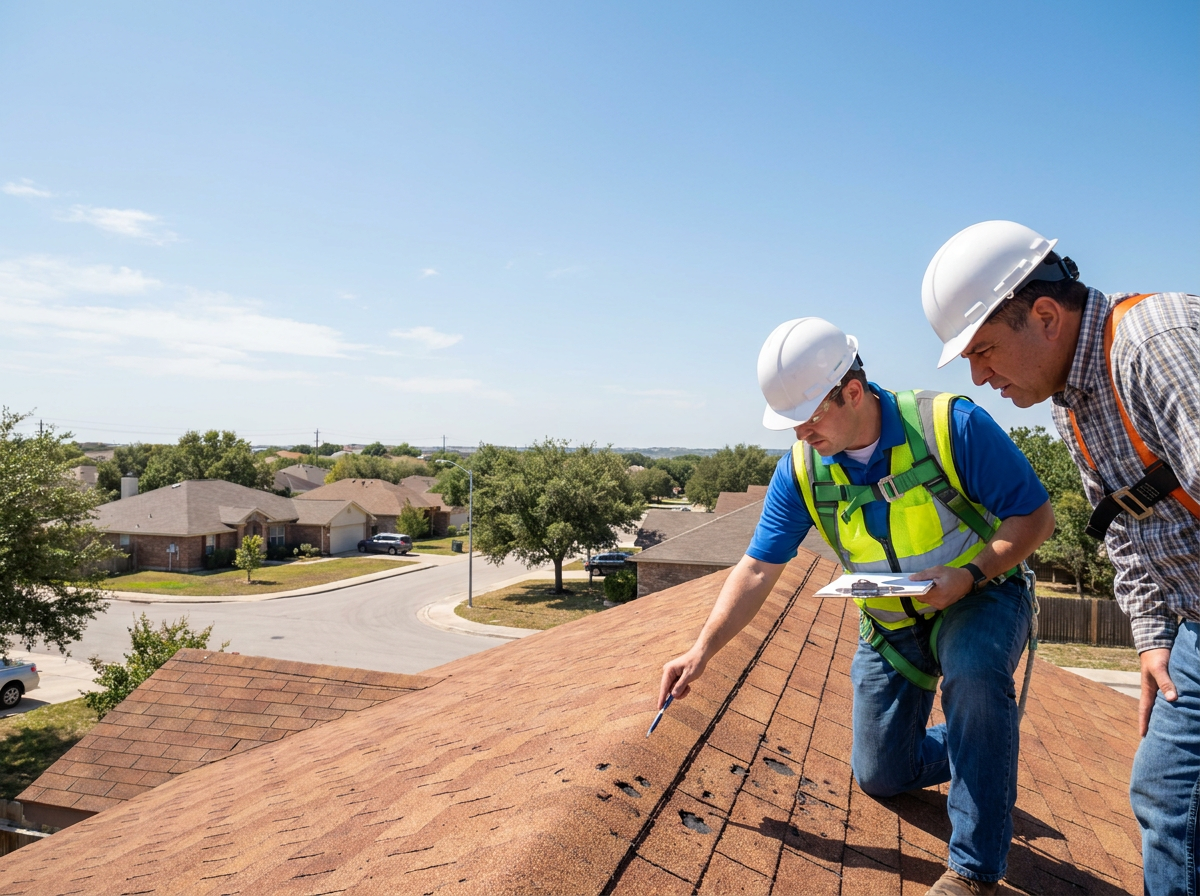
How to File a Roof Insurance Claim in Texas: A Step-by-Step Guide
Storm damage to your roof is stressful. Filing an insurance claim on top of that shouldn't make it worse. The process has clear steps — and knowing them ahead of time puts you in a much stronger position.
Here's exactly how a roof insurance claim works in Texas, from the moment damage occurs to the day your new roof is paid for.
Step 1: Document the Damage Before Anything Else
Before you call your insurance company, document what you can safely see. Photos of your yard, gutters, siding, and any visible roof damage from the ground all create a timestamped record tied to the storm date.
Do not get on the roof yourself. A professional inspector can document everything from up top safely and thoroughly.
The more documentation you have, the harder it is for an adjuster to minimize your claim.
Step 2: Get a Professional Roof Inspection
A roofing contractor who understands insurance claims will inspect your roof and provide a detailed damage report — photos, measurements, and written findings. This report becomes the foundation of your claim.
There's an important distinction here: a contractor who advocates for your roof's condition is different from a contractor who exaggerates damage. Honest documentation of what's actually there is what protects you. Inflated claims create problems and can result in policy cancellation.
At RedTail Roofing, we document what we find. Nothing more, nothing less.
Step 3: Contact Your Insurance Company
Call your insurance company or file online to open a claim. You'll be assigned a claim number and an adjuster. The adjuster works for the insurance company — their job is to assess the damage and determine what your policy covers.
In Texas, your insurance company is required to acknowledge your claim within 15 days and accept or deny it within 15 business days after receiving all documentation. Keep track of dates.
Step 4: Meet the Adjuster at Your Property
Request to be present when the adjuster inspects your roof. Better yet, have your roofing contractor there too. A contractor who has already inspected the roof can walk the adjuster through the findings and make sure nothing gets missed.
Adjusters see dozens of roofs. Having someone there who knows your specific roof and has documented the damage in detail levels the playing field.
Step 5: Review the Claim Decision
After the inspection, your insurance company will send a claim decision — either an approval with a payout amount, a partial approval, or a denial.
Review it carefully. Check that the scope of work matches what was actually found. If items are missing or the payout seems low, you have options:
- Request a re-inspection with additional documentation
- File a supplement through your contractor for items missed in the initial scope
- Hire a public adjuster if the dispute is significant
- File a complaint with the Texas Department of Insurance if the claim is being handled improperly
In Texas, insurance companies are required to treat policyholders fairly. If you feel your claim is being mishandled, you have recourse.
Step 6: Understand Your Payout Structure
Most Texas homeowners policies pay claims in two stages:
- Actual Cash Value (ACV) — the depreciated value of your roof, paid upfront when the claim is approved
- Recoverable Depreciation — the remaining amount, paid after the work is completed and you submit proof of completion
This means your first check won't cover the full job. That's normal. Once your roof is replaced and you submit the final invoice and photos, the insurance company releases the depreciation holdback.
Your deductible comes out of the total payout. In Texas, many policies now have a separate wind/hail deductible — often 1–2% of your home's insured value. Know what yours is before the job starts.
Step 7: Choose Your Contractor and Schedule the Work
Once you have an approved scope and understand your payout, select your contractor and schedule the replacement. Make sure the contractor's written estimate matches the approved insurance scope. Any differences should be addressed before work begins.
Be cautious of contractors who offer to waive your deductible. In Texas, waiving a deductible is insurance fraud and can result in policy cancellation or legal consequences for both the homeowner and the contractor.
Common Mistakes to Avoid
- Waiting too long to file — Texas has a two-year statute of limitations on most property insurance claims, but your policy may have shorter deadlines. File promptly after a storm.
- Signing an Assignment of Benefits (AOB) — this transfers your claim rights to a contractor. Avoid it. You want to stay in control of your own claim.
- Accepting the first offer without reviewing it — adjusters miss things. A second look with a contractor present often results in a more complete scope.
- Hiring based on door-to-door pressure after a storm — storm chasers follow hail events and sign homeowners quickly. Take your time and choose a local contractor with a track record.
Frequently Asked Questions
Will filing a roof insurance claim raise my rates in Texas?It depends on your policy and how many claims you've filed. A single weather-related claim typically has less impact than an at-fault claim. Ask your agent before filing if you're unsure.
What if my roof is old — will insurance still cover it?Older roofs may be covered at actual cash value rather than replacement cost. Some policies exclude roofs over a certain age. Review your policy declarations page for your specific coverage.
How long does the insurance claim process take?From filing to receiving your first check typically takes 2–6 weeks, depending on storm volume, adjuster availability, and how quickly documentation is submitted. Busy storm seasons in Texas can extend that timeline.
Can I use any contractor I want?Yes. In Texas, you have the right to choose your own contractor. Your insurance company can recommend contractors but cannot require you to use them.
RedTail Roofing has extensive experience with storm-damage insurance claims in San Antonio and surrounding South Texas communities. We document damage thoroughly and work alongside adjusters to ensure your roof's condition is accurately represented. Contact us for a free inspection.
Schedule a Free Roof Inspection

